
macbeth act 1 pdf
- Published
- in PDF
Macbeth Act 1 PDF: A Comprehensive Study Guide
Numerous online resources offer Macbeth Act 1 in PDF format, providing detailed summaries, analyses, and key quotes for student comprehension and scholarly pursuits.
Act 1 of Macbeth immediately plunges the audience into a world steeped in supernatural intrigue and foreshadowing, setting the stage for the tragedy to unfold. The opening scene, famously featuring the three Weird Sisters amidst thunder and lightning, establishes a dark and unsettling atmosphere. This initial encounter introduces the play’s central themes of ambition, fate, and the corrupting influence of power.
Shakespeare masterfully employs paradoxical statements – “Fair is foul, and foul is fair” – to blur the lines between good and evil, hinting at the moral ambiguity that will plague the characters. The subsequent scenes introduce Macbeth as a valiant and respected soldier, while also revealing the seeds of ambition within him.
King Duncan’s assessment of Macbeth and Banquo further highlights their bravery, but the prophecies delivered by the witches begin to subtly manipulate their destinies. Act 1 expertly lays the groundwork for the dramatic conflicts and psychological turmoil that define the play, making it a crucial starting point for understanding the entire narrative.
Availability of Macbeth Act 1 PDF Resources
Numerous online platforms offer Macbeth Act 1 in readily accessible PDF format, catering to diverse academic needs. Websites like Course Hero provide comprehensive study guides, including scene summaries, character analyses, and crucial quotations, all downloadable as PDFs. Educational institutions frequently offer digitized versions of the play, including individual acts, for student convenience.
Project Gutenberg and similar online libraries also host free, legally downloadable PDFs of Shakespeare’s complete works, including Macbeth; These resources are invaluable for students, teachers, and anyone interested in exploring the play.
SparkNotes and CliffNotes offer concise summaries and analyses, often available as downloadable PDFs or through web-based viewing. A quick internet search for “Macbeth Act 1 PDF” yields a wealth of options, ensuring easy access to this foundational text for study and enjoyment.
Historical Context of Macbeth Act 1
Shakespeare’s Macbeth, though a fictionalized account, draws heavily from the historical figure of Mac Bethad mac Findláich, a King of Scotland from 1040 to 1057. Act 1 immediately establishes a turbulent political landscape mirroring the real power struggles of 11th-century Scotland. The play reflects Jacobean anxieties about treason and regicide, prevalent during King James I’s reign—James being a descendant of Banquo, a character portrayed favorably in the play.
The Gunpowder Plot of 1605, a failed attempt to blow up Parliament, deeply influenced the play’s themes of ambition and betrayal. Act 1’s depiction of witches aligns with the contemporary belief in witchcraft, a widespread fear during the period. Understanding this historical backdrop enriches the interpretation of Act 1’s events and foreshadowing.

Act 1, Scene 1: The Witches’ Opening
The play dramatically opens with the iconic scene of the three witches amidst thunder and lightning, setting a dark and ominous tone. Their initial dialogue is characterized by paradoxical statements – “Fair is foul, and foul is fair” – immediately establishing a world where appearances are deceptive and moral order is disrupted. This scene, crucial in Act 1, isn’t a traditional introduction; it’s atmospheric and unsettling, hinting at supernatural interference.
The witches plan to meet Macbeth after the battle, foreshadowing his fate. Their rhyming couplets and ambiguous language create a sense of mystery and dread. PDF study guides often highlight this scene as foundational to understanding the play’s themes of ambition, fate, and the corrupting influence of evil.
Analysis of the Witches’ Paradoxical Statements
The witches’ repeated use of paradox, most notably “Fair is foul, and foul is fair,” is a central element of Act 1 and a key focus in Macbeth PDF analyses. This statement isn’t merely a catchy phrase; it reflects a universe thrown into chaos, where good and evil are blurred, and moral distinctions are meaningless. It suggests that what appears attractive can be inherently dangerous, and vice versa.
Scholarly interpretations within PDF resources often link this paradox to the play’s exploration of ambition and its corrupting power. The witches’ pronouncements challenge conventional notions of morality, preparing the audience for Macbeth’s descent into tyranny. PDF guides emphasize how this initial ambiguity establishes a pervasive atmosphere of uncertainty and foreshadows the tragic events to come.
The Significance of Thunder and Lightning
The tumultuous weather – specifically the thunder and lightning – accompanying the witches’ initial appearance in Act 1, Scene 1, is a crucial element frequently analyzed in Macbeth PDF study guides. This isn’t simply atmospheric staging; it’s a powerful symbol of the disruption and chaos that the witches represent, and foreshadows the upheaval they will unleash upon Scotland.
PDF resources highlight how Shakespeare utilizes pathetic fallacy, imbuing the natural world with human emotions. The storm mirrors the inner turmoil and moral corruption that will grip Macbeth. Furthermore, the dramatic weather creates a sense of foreboding and supernatural power, emphasizing the witches’ connection to dark forces. Detailed analyses within these guides often connect the storm to the play’s themes of fate and free will;
Act 1, Scene 2: Reporting the Battle
Scene 2 dramatically opens with a wounded Captain reporting to King Duncan on the fierce battle and Macbeth’s extraordinary bravery. Macbeth Act 1 PDF guides emphasize this scene as pivotal for establishing Macbeth’s initial characterization – a valiant and loyal soldier. The Captain’s vivid descriptions of Macbeth’s combat prowess, comparing him to a valued lion, immediately position him as a heroic figure in the eyes of both Duncan and the audience.
These PDF resources often dissect the Captain’s language, noting the hyperbolic praise used to elevate Macbeth’s status. Furthermore, the scene introduces Banquo, also lauded for his courage, setting up the crucial dynamic between the two generals. Detailed analyses within these guides explore how this initial portrayal of Macbeth is deliberately crafted to heighten the tragedy of his later descent into tyranny;
Macbeth’s Initial Characterization – A Brave Soldier
Macbeth Act 1 PDF study guides consistently highlight the scene with the Captain as foundational for understanding Macbeth’s initial portrayal. He is presented as a tremendously courageous and skilled warrior, fiercely loyal to King Duncan and Scotland. The Captain’s enthusiastic report details Macbeth’s valor on the battlefield, emphasizing his ruthless efficiency and unwavering bravery in defeating the rebel Macdonwald.
These resources often point to the Captain’s simile – comparing Macbeth to a lion – as a key indicator of his heroic stature. PDF analyses delve into the significance of this imagery, showcasing how Shakespeare immediately establishes Macbeth as a noble and powerful figure. However, guides also note the subtle foreshadowing within this praise, hinting at a potential for unchecked ambition and violence inherent in his strength.
The King’s Assessment of Macbeth and Banquo
Macbeth Act 1 PDF resources emphasize King Duncan’s evaluation of Macbeth and Banquo as crucial for understanding their contrasting fates. Duncan views Macbeth with gratitude and high praise, rewarding him with the title of Thane of Cawdor for his exceptional bravery and loyalty demonstrated in battle. PDF analyses highlight Duncan’s trust in Macbeth, seeing him as a worthy and honorable subject.
However, Duncan’s assessment of Banquo reveals a different kind of respect. He acknowledges Banquo’s valor but also notes a certain “wisdom” and restraint that distinguishes him from Macbeth. Study guides often point out Duncan’s observation that Banquo is less susceptible to ambition’s corrupting influence. These PDFs demonstrate how Duncan’s contrasting appraisals foreshadow the divergent paths taken by the two generals, setting the stage for the tragedy to unfold.
Act 1, Scene 3: The Prophecies
Macbeth Act 1 PDF analyses center on the pivotal scene where Macbeth and Banquo encounter the Weird Sisters. These resources detail how the witches deliver a series of prophecies that ignite Macbeth’s ambition. The first prophecy hails Macbeth as Thane of Glamis (his current title), Thane of Cawdor, and ultimately, King hereafter. PDF study guides emphasize the immediate impact of these predictions on Macbeth’s psyche.
Furthermore, the witches’ pronouncements aren’t straightforward; they’re deliberately ambiguous and paradoxical, creating a sense of unease. Digital texts highlight the witches’ skill in manipulating language to plant seeds of desire and doubt. Detailed PDFs also explore the significance of the witches’ disappearance immediately after delivering the prophecies, leaving Macbeth and Banquo to grapple with their implications and fueling Macbeth’s internal conflict.
The Weird Sisters and Their Predictions for Macbeth
Macbeth Act 1 PDFs extensively analyze the Weird Sisters, portraying them as ambiguous figures embodying chaos and fate. These resources detail their initial appearance on the heath amidst thunder and lightning, establishing a supernatural and ominous atmosphere. The sisters’ predictions for Macbeth – Thane of Glamis, Cawdor, and future king – are central to the play’s unfolding tragedy, as detailed in numerous online study guides.
PDF analyses emphasize the paradoxical nature of their pronouncements (“Fair is foul, and foul is fair”), suggesting a distorted moral universe. Digital texts explore how the witches exploit Macbeth’s existing ambition, subtly influencing his thoughts and actions. Comprehensive PDFs also highlight the sisters’ deliberate vagueness, allowing Macbeth to interpret the prophecies in a way that suits his desires, ultimately leading to his downfall.
The Prophecies for Banquo
Macbeth Act 1 PDF resources dedicate significant attention to the prophecies delivered to Banquo by the Weird Sisters, contrasting them with those given to Macbeth. While Macbeth is promised kingship, Banquo is told his descendants will be kings, though he himself will not reign. Digital study guides emphasize this distinction as crucial to the play’s themes of ambition and fate.
PDF analyses highlight Banquo’s more cautious and skeptical reaction to the witches, a stark contrast to Macbeth’s immediate fascination. Comprehensive texts explore how Banquo’s lineage becoming royal fuels Macbeth’s later paranoia and actions. Online resources detail how the witches’ prophecies for Banquo serve as a catalyst for the play’s central conflict, driving Macbeth towards tyranny and ultimately, his destruction. The PDFs often include detailed character analyses focusing on Banquo’s integrity.
Act 1, Scene 4: The Thane of Cawdor and Macbeth’s Reaction

Macbeth Act 1 PDF study guides meticulously dissect this pivotal scene, focusing on King Duncan’s announcement of Macbeth’s new title as Thane of Cawdor. This confirmation immediately sparks internal conflict within Macbeth, as it validates the witches’ first prophecy. Digital resources emphasize Macbeth’s growing ambition and the seeds of his future treachery being sown.
PDF analyses detail Macbeth’s aside, revealing his contemplation of murdering Duncan to fulfill the remaining prophecy of becoming king. Comprehensive texts explore the dramatic irony present, as Duncan trusts Macbeth implicitly. Online resources highlight Banquo’s skepticism towards the witches, contrasting his cautious nature with Macbeth’s burgeoning desire for power. These PDFs often include detailed notes on the scene’s symbolism and foreshadowing.
King Duncan’s Announcement and Macbeth’s Internal Conflict
Macbeth Act 1 PDF resources extensively analyze King Duncan’s proclamation of Macbeth as the new Thane of Cawdor, a moment that profoundly impacts the protagonist. Digital study guides pinpoint this as a catalyst for Macbeth’s burgeoning internal conflict, as the fulfilled prophecy ignites a dangerous ambition. PDFs detail how this news forces Macbeth to grapple with the implications of becoming king, as foretold by the witches.
Comprehensive analyses showcase Macbeth’s immediate reaction – a whirlwind of thoughts questioning whether to achieve the throne through honorable means or through regicide. Online resources emphasize the dramatic tension created by this internal debate, often including textual evidence from Macbeth’s soliloquies. Detailed PDFs explore the psychological impact of Duncan’s trust, further complicating Macbeth’s moral dilemma and setting the stage for future tragedy.
Banquo’s Skepticism Regarding the Witches

Macbeth Act 1 PDF study guides highlight Banquo’s contrasting reaction to the witches’ prophecies, emphasizing his inherent skepticism. Digital resources demonstrate how Banquo, unlike Macbeth, views the witches with caution, attributing their pronouncements to “instruments of darkness.” PDF analyses detail his famous line about the “instruments of darkness” revealing a distrust of supernatural forces and a recognition of their potential to deceive.
Comprehensive guides showcase Banquo’s concern that the witches might tell truths only to lead men astray, a crucial element in understanding his character. Online PDFs often include comparative analyses of Macbeth and Banquo’s responses, illustrating their differing moral compasses. Detailed resources explore how Banquo’s skepticism serves as a foil to Macbeth’s ambition, foreshadowing his eventual fate and highlighting the dangers of unchecked desire.
Act 1, Scene 5: Lady Macbeth’s Ambition
Macbeth Act 1 PDF resources extensively analyze Lady Macbeth’s ambition, revealed immediately upon reading her husband’s letter. Digital study guides showcase her ruthless determination to seize power, surpassing even Macbeth’s initial desires. PDF analyses detail her famous soliloquy, where she calls upon the spirits to “unsex” her, demonstrating a willingness to abandon her femininity for ambition.
Comprehensive guides emphasize her belief that Macbeth is “too full o’ the milk of human kindness” and requires her forceful influence to achieve greatness. Online PDFs often include close readings of her language, highlighting its aggressive and manipulative nature. Detailed resources explore how Lady Macbeth’s ambition drives the play’s central conflict, making her a pivotal character in the unfolding tragedy.

Lady Macbeth’s Reading of Macbeth’s Letter
Macbeth Act 1 PDF study materials meticulously dissect Lady Macbeth’s reaction to the letter from her husband. Digital resources highlight how the news of the witches’ prophecies and his new title, Thane of Cawdor, immediately ignites her ambition. PDF analyses emphasize her recognition of Macbeth’s character – believing he possesses the necessary ambition but lacks the ruthlessness to achieve the kingship.
Comprehensive guides showcase her initial planning, even before Macbeth arrives home, revealing a proactive and calculating nature. Online PDFs often include textual excerpts of the letter itself, alongside detailed interpretations of Lady Macbeth’s internal monologue as she reads it. Detailed resources explore how this scene establishes her as a driving force, setting the stage for her manipulative influence over Macbeth.
Her Plan to Manipulate Macbeth
Macbeth Act 1 PDF resources thoroughly examine Lady Macbeth’s calculated scheme to influence her husband. Digital study guides reveal her intention to “pour [her] spirits in [his] ear” and “undaunt [his] courage,” recognizing his ambition needs bolstering. PDF analyses highlight her desire to strip him of perceived weaknesses – compassion and morality – believing these hinder his path to the throne.
Comprehensive materials detail her plan to exploit his ambition, questioning his manhood and appealing to his pride. Online PDFs often include close readings of her soliloquies, demonstrating her ruthless determination. Detailed resources emphasize her understanding of Macbeth’s character, allowing her to tailor her manipulation effectively, ultimately aiming to control his actions and secure the crown for them both.
Act 1, Scene 6: The Arrival of King Duncan
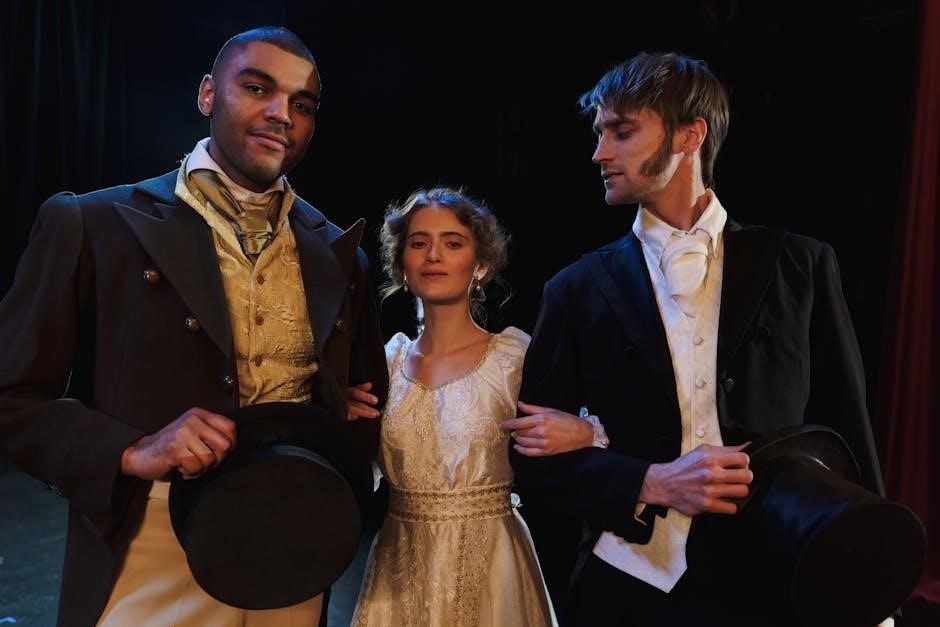
Macbeth Act 1 PDF analyses focus on the significance of King Duncan’s arrival at Inverness, noting the dramatic irony present. Digital resources detail the carefully constructed atmosphere of hospitality created by Macbeth and Lady Macbeth, masking their treacherous intentions. PDF study guides emphasize the contrast between Duncan’s trusting nature and the couple’s dark plotting.
Comprehensive materials highlight the symbolic importance of Inverness as a seemingly safe haven, soon to become a site of regicide. Online PDFs often include commentary on the imagery of appearance versus reality, prevalent throughout the scene. Detailed resources explore Lady Macbeth’s meticulous preparations, showcasing her control and ambition, while foreshadowing the impending tragedy.
The Atmosphere of Inverness and Initial Impressions
Macbeth Act 1 PDF resources consistently analyze Inverness as initially presented – a place of seeming peace and tranquility, a stark contrast to the preceding battle scenes. Digital study guides emphasize how Shakespeare uses this setting to heighten the dramatic irony, knowing the horrors soon to unfold within its walls. PDF analyses detail the initial impressions of Duncan, perceiving Inverness as a welcoming and honorable residence.
Comprehensive materials explore how the atmosphere subtly hints at deception, with Lady Macbeth’s carefully crafted hospitality masking her and Macbeth’s true intentions. Online PDFs often highlight the symbolic weight of the castle, representing both safety and vulnerability. Detailed resources discuss how the calm exterior belies the turbulent inner world of the characters, particularly Macbeth’s growing ambition and internal conflict.
Lady Macbeth’s Preparation for Duncan’s Visit
Macbeth Act 1 PDF analyses meticulously dissect Lady Macbeth’s preparations, revealing a calculated facade of hospitality masking her sinister plot. Digital study guides emphasize her invocation of evil spirits to “unsex” her, demonstrating her willingness to abandon femininity for ruthless ambition. PDF resources detail her instructions to Macbeth, highlighting her control and manipulative nature.
Comprehensive materials explore the symbolic significance of her preparations – the meticulous planning mirroring the careful execution of the impending murder. Online PDFs often focus on her desire to appear gracious and welcoming to Duncan, a deliberate attempt to lower his guard. Detailed resources discuss how her seemingly innocent actions are deeply ironic, foreshadowing the betrayal to come, and are readily available in downloadable PDF formats.
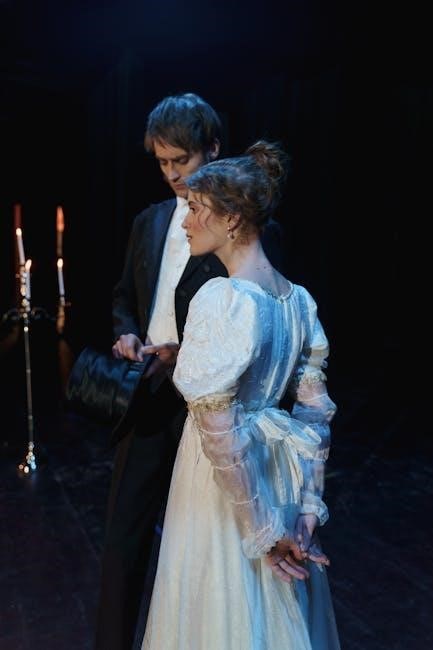
Act 1, Scene 7: Macbeth’s Soliloquy and Decision
Macbeth Act 1 PDF study guides extensively analyze Macbeth’s pivotal soliloquy, revealing his agonizing internal conflict regarding the murder of Duncan. Digital resources highlight his contemplation of the consequences – both earthly and divine – demonstrating his initial moral reservations. PDF analyses dissect his reasoning, showcasing the struggle between ambition and conscience, a key element explored in downloadable materials.
Comprehensive PDFs emphasize Lady Macbeth’s persuasive influence, detailing how she skillfully manipulates his fears and insecurities. Online resources illustrate her challenge to his manhood, ultimately driving him towards a fateful decision. Detailed study guides available in PDF format explore the dramatic irony of Macbeth’s resolve, knowing the audience anticipates the tragic outcome of his choice.
Macbeth’s Internal Debate About Killing Duncan
Macbeth Act 1 PDF resources meticulously chart Macbeth’s turbulent internal debate concerning Duncan’s murder, showcasing his wavering resolve. Digital study guides emphasize his initial hesitation, fueled by loyalty and a sense of moral obligation, readily available in downloadable formats. PDF analyses dissect his contemplation of the sacredness of kingship and the potential repercussions of regicide, offering detailed textual evidence.
Comprehensive PDFs highlight the conflict between his ambition, spurred by the witches’ prophecies, and his inherent goodness. Online resources illustrate his fear of earthly justice and eternal damnation, themes thoroughly explored in accessible PDF documents. Detailed study guides available as PDFs reveal how Macbeth weighs the potential gains against the immense risks, a crucial aspect of his character development.
Lady Macbeth’s Persuasion and Final Plan
Macbeth Act 1 PDF analyses thoroughly examine Lady Macbeth’s masterful manipulation of her husband, readily accessible in downloadable study guides. Digital resources detail her challenge to his manhood and her ruthless ambition, often presented with scene-by-scene breakdowns in PDF format. Comprehensive PDFs showcase her strategic planning for Duncan’s murder, including the framing of the king’s guards.
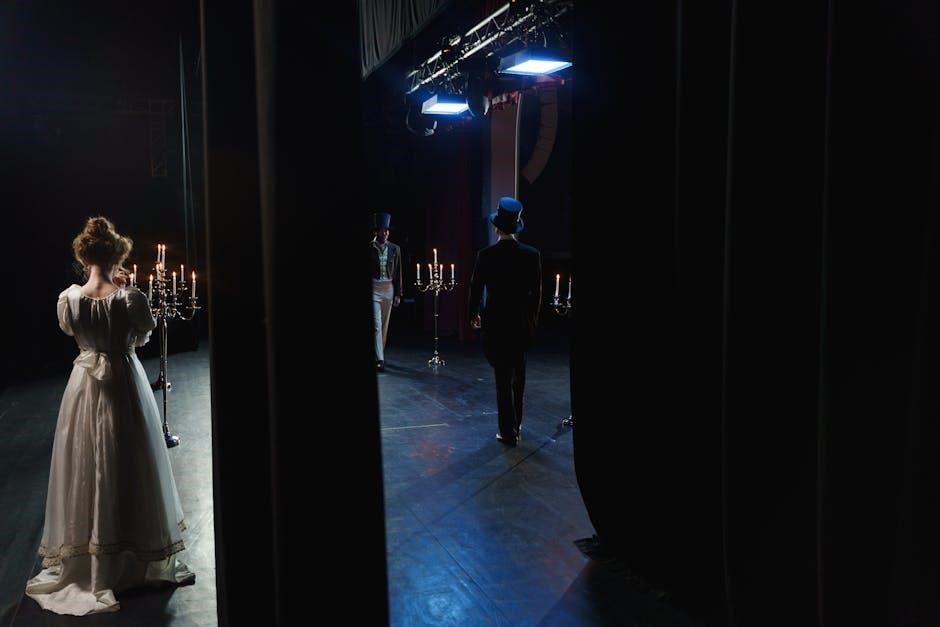
Online study materials highlight Lady Macbeth’s chilling resolve and her ability to suppress her own feminine sensibilities, a key element explored in detailed PDF character analyses. PDF guides illustrate her instructions to Macbeth regarding the execution of the plan, emphasizing secrecy and swift action. Detailed resources reveal how she anticipates and addresses potential obstacles, solidifying her role as the driving force behind the regicide, all available within comprehensive Macbeth Act 1 PDFs.