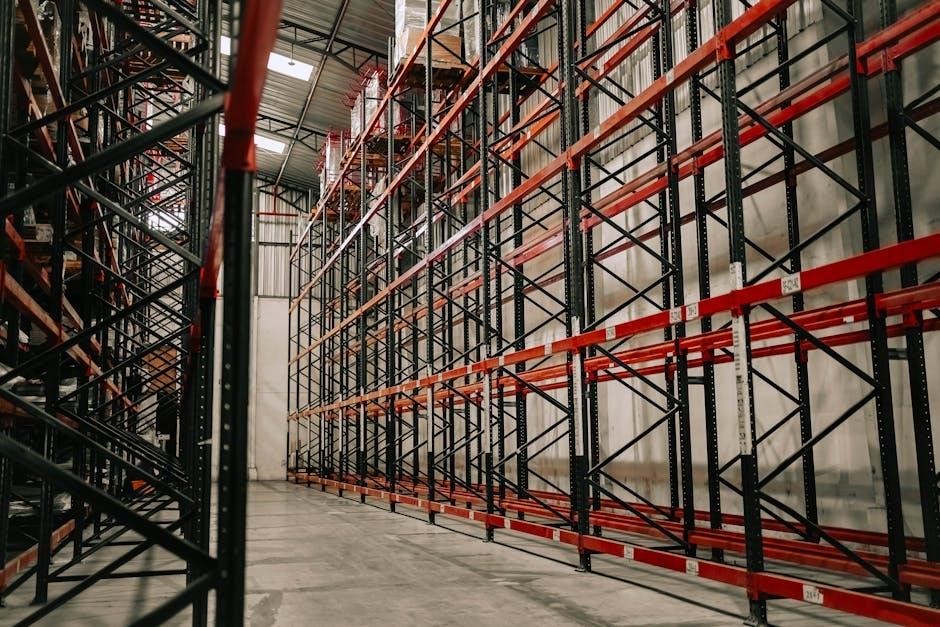
warehouse racking safety standards pdf
- Published
- in PDF
Warehousing involves crucial principles for daily operations, encompassing receiving and organizing goods; safety is paramount, demanding strict adherence to OSHA guidelines.
Importance of Racking Safety
Maintaining warehouse racking safety is absolutely critical for protecting employees, preventing costly damage to products, and ensuring uninterrupted operational efficiency. A collapse, even partial, can lead to severe injuries or fatalities, resulting in significant legal and financial repercussions for the company.
Properly implemented safety protocols, including regular inspections and adherence to OSHA regulations, minimize the risk of accidents. Warehouses serve as pivotal points in the global supply chain, and any disruption due to safety incidents can have cascading effects.
Furthermore, secure racking systems contribute to the longevity of the storage infrastructure, reducing the need for frequent and expensive replacements. Prioritizing racking safety demonstrates a commitment to worker well-being and responsible business practices, fostering a positive work environment.
Scope of Warehouse Racking Safety Standards
Warehouse racking safety standards encompass a broad range of considerations, extending beyond simply the structural integrity of the racking itself. These standards address all facets of material storage, from initial installation and ongoing maintenance to proper load distribution and employee training.
The scope includes various racking types – pallet, cantilever, drive-in, and drive-through – each requiring specific safety measures. It also covers the securement of goods to prevent falling hazards and the implementation of appropriate safety barriers and PPE.
Compliance necessitates detailed documentation of inspections, repairs, and load capacity assessments. Ultimately, the standards aim to create a safe working environment, minimizing risks associated with warehousing operations and ensuring the secure storage of goods.

OSHA Regulations and Compliance
OSHA establishes vital safety guidelines for material storage and racking systems, demanding rigorous employee training and holding employers accountable for safe practices.
OSHA Guidelines for Material Storage
OSHA mandates specific guidelines to ensure safe material storage within warehouses, directly impacting overall facility safety and worker well-being. These regulations cover a broad spectrum, including proper stacking methods to prevent collapses, maintaining clear aisleways for safe movement of personnel and equipment, and ensuring adequate illumination throughout the storage areas.
Furthermore, OSHA emphasizes the importance of securing materials to prevent shifting or falling, particularly for items stored at higher elevations. Load limits must be clearly marked and strictly adhered to, preventing overloading of racking systems. Regular inspections are crucial for identifying and addressing potential hazards, such as damaged racking components or improperly stored materials. Compliance with these guidelines is not merely a legal obligation, but a fundamental aspect of responsible warehouse management, fostering a secure and productive work environment.
Employee Training Requirements

Comprehensive employee training is a non-negotiable aspect of warehouse racking safety, as mandated by OSHA. Training programs must cover hazard recognition, including identifying damaged racking, improper loading, and unsafe operating procedures. Employees need to understand proper stacking techniques, load capacity limits, and the correct use of material handling equipment like forklifts.
Furthermore, training should detail emergency procedures, including evacuation plans and reporting protocols for damaged racking or near-miss incidents. Refresher courses are essential to reinforce safe practices and update employees on any changes to procedures or regulations. A well-trained workforce is a proactive defense against accidents, fostering a culture of safety and minimizing the risk of injuries and property damage. Companies are liable if employees lack understanding of these guidelines.
Employer Liability and Safe Practices
Employers bear significant legal responsibility for maintaining a safe working environment within their warehouses, particularly concerning racking systems. Failure to comply with OSHA regulations and implement robust safety practices can result in substantial fines, legal repercussions, and, most importantly, employee injuries. Proactive measures, such as regular racking inspections, prompt repairs of damaged components, and comprehensive employee training, are crucial for mitigating risk.
Establishing and enforcing clear safety protocols, providing appropriate personal protective equipment (PPE), and fostering a safety-conscious culture are also essential. Employers must demonstrate due diligence in preventing accidents and ensuring the well-being of their workforce. Ignoring safety standards isn’t just unethical; it’s a costly and potentially devastating business decision.
Types of Warehouse Racking Systems
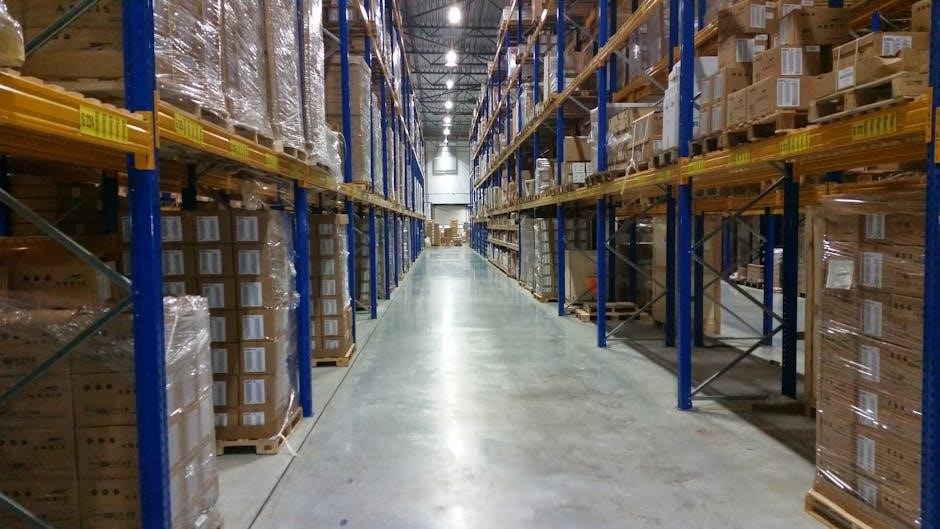
Diverse racking solutions exist, including pallet, cantilever, and drive-in/through systems, each designed for specific storage needs and logistical workflows.
Pallet Racking Systems
Pallet racking represents the most widely utilized storage solution in warehousing, offering versatile configurations to accommodate diverse pallet sizes and weights. These systems efficiently maximize vertical space, enabling high-density storage and streamlined material handling. Common types include selective, drive-in, push-back, and pallet flow racking, each suited for different inventory turnover rates and space constraints.
Safety within pallet racking systems hinges on proper installation, regular inspections, and adherence to load capacity limits. Damaged components, such as uprights or beams, must be promptly repaired or replaced to prevent collapses. Implementing rack protection systems, like column guards and end-of-aisle protectors, mitigates the risk of forklift impacts. Thorough employee training on safe operating procedures is also essential for preventing accidents and maintaining a secure warehouse environment.
Cantilever Racking Systems
Cantilever racking is specifically designed for storing long, bulky items like lumber, pipes, or furniture, offering unobstructed access and flexibility. Unlike pallet racking, it lacks front columns, allowing for easy loading and unloading with forklifts. The system consists of uprights with horizontal arms extending outward to support the load.
Safety considerations for cantilever racks center around load distribution and stability. Ensuring loads are evenly placed on the arms and within the specified weight capacity is crucial to prevent tipping or collapse. Regular inspections should focus on arm connections, base plates, and upright integrity. Implementing end-of-aisle protectors and limiting forklift speed within the racking area further enhances safety. Proper training for forklift operators on handling long loads is also paramount.
Drive-In and Drive-Through Racking
Drive-in and drive-through racking systems maximize storage density by allowing forklifts to enter the racking structure directly. Drive-in racking utilizes a first-in, last-out (FILO) inventory method, while drive-through allows for access from both sides, functioning as first-in, first-out (FIFO). These systems are ideal for storing large quantities of similar products.
Safety concerns with these systems revolve around forklift operation within the racking. Clear aisle markings, speed limits, and designated traffic patterns are essential. Regular inspections must verify rail integrity, upright stability, and proper load placement to prevent rack collapse. Implementing robust end-of-row protection and ensuring adequate lighting are also vital. Thorough forklift operator training, emphasizing safe entry and exit procedures, is paramount for preventing accidents.
Warehouse Racking Inspection and Maintenance
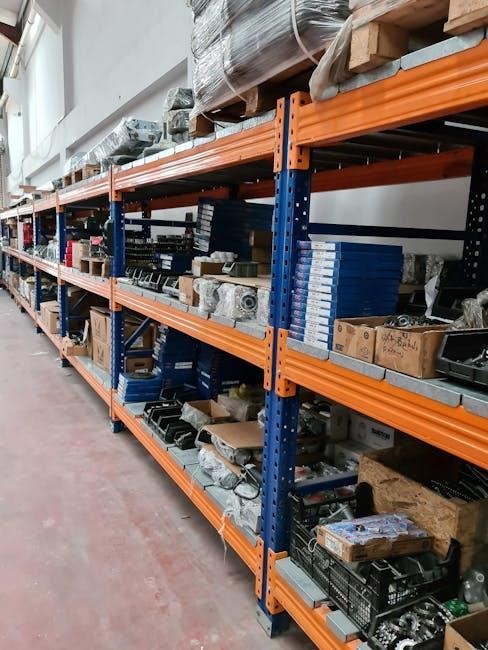
Regular inspections are vital for identifying damage; preventative maintenance procedures, alongside prompt repairs, ensure racking systems remain stable and compliant with safety standards.
Regular Inspection Schedules
Establishing consistent inspection schedules is fundamental to maintaining warehouse racking safety. Daily visual checks by personnel actively working in the area can identify obvious damage, like bent uprights or missing components. More comprehensive, formal inspections should occur routinely – ideally, quarterly, and annually, conducted by a trained and competent individual.
These detailed inspections must meticulously document the condition of each rack, noting any dents, corrosion, or misalignment. Records of these inspections are crucial for demonstrating due diligence and compliance with OSHA regulations. Following any racking modification or after an impact event, an immediate inspection is absolutely necessary. A documented schedule ensures no rack goes unexamined for an extended period, proactively mitigating potential hazards and ensuring a safe working environment.
Damage Assessment and Repair
Following an inspection revealing damage, a thorough assessment is critical. Minor damage, like superficial paint loss, may not immediately compromise structural integrity, but should be monitored. However, significant damage – bent uprights, broken beams, or severely corroded components – requires immediate action. A qualified racking inspector must evaluate the extent of the damage and determine if repair is feasible.
Repairs should only be performed by trained personnel using manufacturer-approved methods and parts. Never attempt makeshift repairs. If damage exceeds repairable limits, the affected racking must be immediately taken out of service. Detailed records of all damage assessments, repairs, and rack removals are essential for maintaining a safe and compliant warehouse environment, demonstrating adherence to OSHA standards and preventing potential collapses.
Preventative Maintenance Procedures
Implementing a robust preventative maintenance program is vital for long-term racking safety. This includes regular tightening of bolts and anchors, checking for corrosion, and ensuring all safety devices – like rack protectors – are in good working order. Lubricate moving parts as needed to prevent seizing and wear. A documented schedule outlining these tasks, and assigning responsibility, is crucial.
Routine cleaning to remove debris and obstructions is also essential. Address minor issues promptly before they escalate into major problems. Regularly review inspection reports to identify recurring issues and adjust maintenance procedures accordingly. Consistent preventative maintenance minimizes the risk of unexpected failures, extends the lifespan of the racking system, and demonstrates a commitment to OSHA compliance and worker safety.
Load Capacity and Weight Distribution
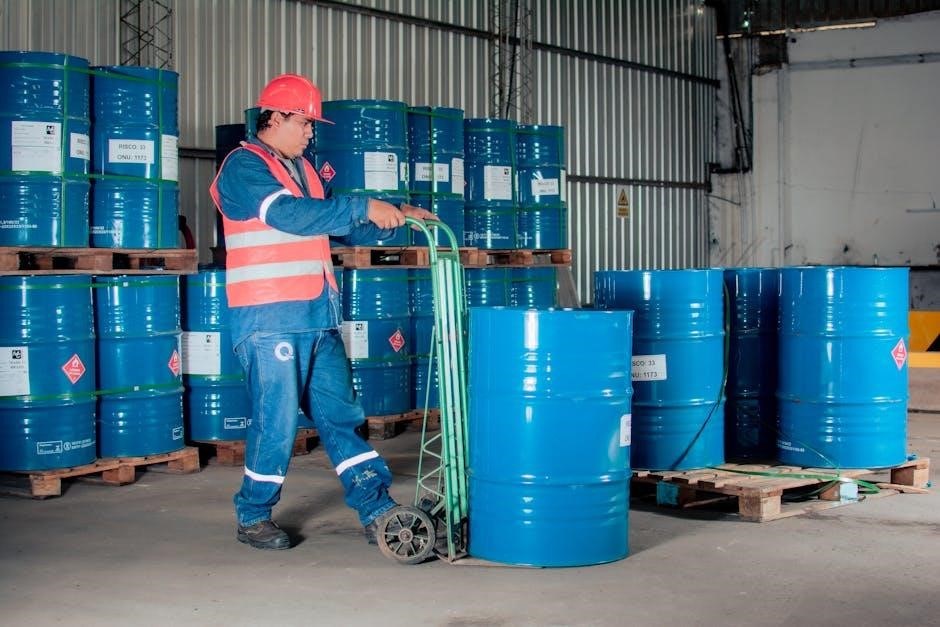
Understanding load limits and employing proper weight distribution techniques are fundamental to preventing structural failures and ensuring warehouse racking system integrity.
Understanding Load Limits
Determining accurate load limits is absolutely critical for warehouse racking safety, preventing catastrophic collapses and ensuring worker well-being. Each racking system, whether pallet, cantilever, or drive-in, possesses a maximum weight capacity meticulously engineered and clearly specified by the manufacturer. Ignoring these limits introduces unacceptable risk.
These limits aren’t simply about the total weight; they also consider weight distribution across beams and uprights. Uneven loading concentrates stress, significantly reducing the overall capacity. Factors like beam length, rack height, and the type of stored materials all influence safe load parameters.
Regularly reviewing load capacity information, often found on rack unit plates, and ensuring all personnel understand these guidelines is essential. Overloading, even slightly, compromises structural integrity and dramatically increases the potential for accidents. Proper signage clearly displaying load limits on each rack level reinforces safe practices.
Proper Weight Distribution Techniques
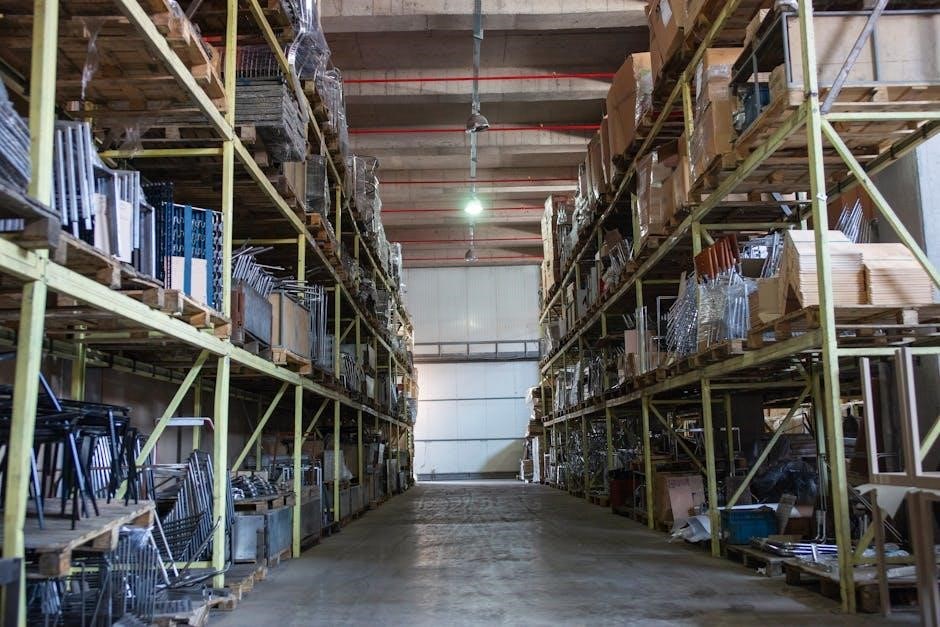
Achieving optimal weight distribution within a warehouse racking system is paramount for maintaining structural integrity and preventing potential collapses. Loads should always be centered on beams, avoiding cantilevered positions that create uneven stress. Distribute weight as uniformly as possible across the rack level, rather than concentrating it in one area.
Heavier items should be placed on lower levels to maintain a lower center of gravity, enhancing stability. Lighter items can then be stored on higher levels, reducing the overall stress on the racking structure. Avoid stacking items directly on beams; utilize pallets to distribute the load evenly.
Regularly inspect load placement to identify and correct any imbalances. Training employees on proper stacking techniques and the importance of weight distribution is crucial. Consistent adherence to these principles minimizes risk and maximizes the lifespan of the racking system.
Impact of Overloading
Overloading warehouse racking systems presents a significant and potentially catastrophic safety hazard. Exceeding the specified load capacity compromises the structural integrity of the rack, leading to bending, buckling, or even complete collapse. This can result in severe injuries to personnel and substantial damage to stored goods.
Even seemingly minor overloads, sustained over time, can weaken the racking components, accelerating fatigue and increasing the risk of failure. The impact isn’t limited to the directly overloaded rack; it can create a cascading effect, destabilizing adjacent sections.

Consistent adherence to load limits, clearly marked on the racking, is essential. Regular inspections and accurate weight verification are crucial preventative measures. Employee training must emphasize the dangers of overloading and the importance of reporting any suspected violations immediately.
Safety Equipment and Solutions
Implementing rack protection systems, safety barriers, and ensuring proper PPE usage are vital for enhancing warehouse compliance and minimizing potential risks.
Rack Protection Systems
Robust rack protection systems are essential components of a comprehensive warehouse safety strategy, designed to mitigate damage from forklift impacts. These systems commonly include guardrails, end-of-aisle protectors, and column protectors, strategically placed to absorb and redirect accidental collisions;
Selecting the appropriate protection level depends on factors like forklift traffic density, aisle width, and the value of stored goods. Properly installed protectors significantly reduce repair costs, downtime, and the potential for catastrophic rack collapse. Regular inspection of these systems is crucial to ensure their continued effectiveness, identifying and replacing damaged components promptly.
Investing in high-quality rack protection isn’t merely a cost; it’s a proactive measure that safeguards employees, inventory, and the overall operational integrity of the warehouse facility, aligning with stringent OSHA requirements.
Safety Barriers and Guardrails
Strategically placed safety barriers and guardrails are fundamental in delineating pedestrian walkways from forklift traffic within a warehouse environment. These physical separations minimize the risk of collisions, protecting personnel and enhancing overall workplace safety. Guardrails should be constructed from durable materials, capable of withstanding impacts and clearly visible to all warehouse staff.
Effective barrier systems extend beyond simply marking boundaries; they should incorporate features like impact resistance and appropriate height to prevent accidental crossings. Regular assessment of barrier integrity is vital, ensuring they remain securely anchored and undamaged. Compliance with OSHA standards regarding walkway markings and barrier specifications is non-negotiable.
Implementing these safeguards demonstrates a commitment to employee well-being and reduces the potential for costly accidents and associated liabilities, fostering a safer and more productive work environment.
Personal Protective Equipment (PPE)
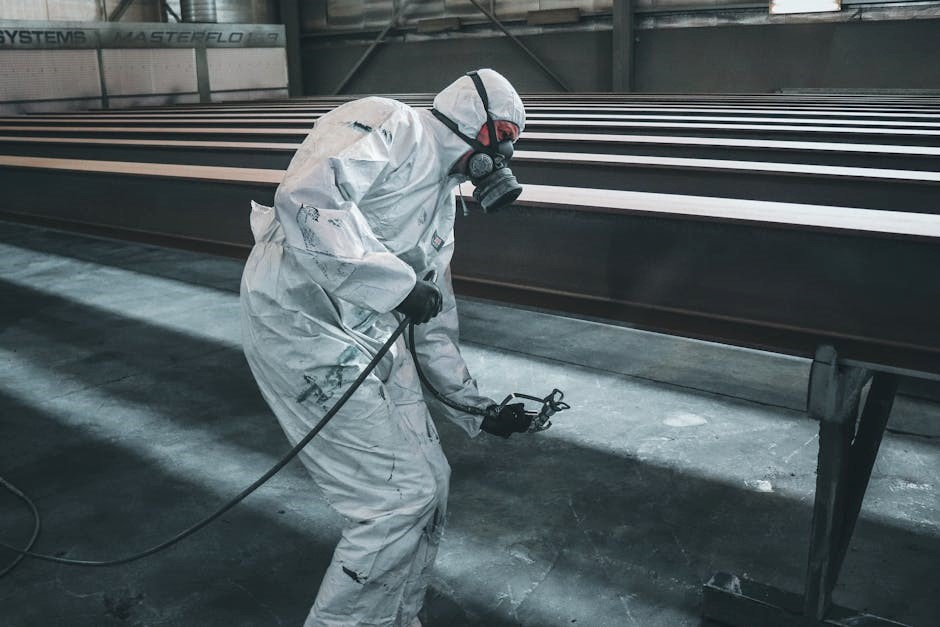
Providing and mandating appropriate Personal Protective Equipment (PPE) is a cornerstone of warehouse racking safety. Essential PPE includes high-visibility vests, safety footwear with steel toes, and hard hats, particularly in areas with overhead activity or potential falling objects. Eye protection, such as safety glasses or goggles, is crucial when handling materials or performing maintenance tasks.
Gloves appropriate for the task at hand – whether handling cardboard, metal, or operating machinery – are also vital. Proper training on the correct use, maintenance, and limitations of each PPE item is paramount. Employers are responsible for ensuring PPE is readily available, fits correctly, and is replaced when damaged or worn.
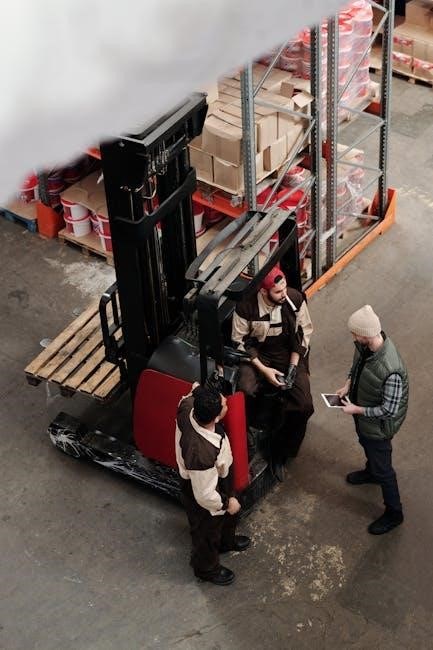
Consistent enforcement of PPE policies, coupled with regular safety audits, reinforces a culture of safety and minimizes the risk of preventable injuries within the warehouse environment.